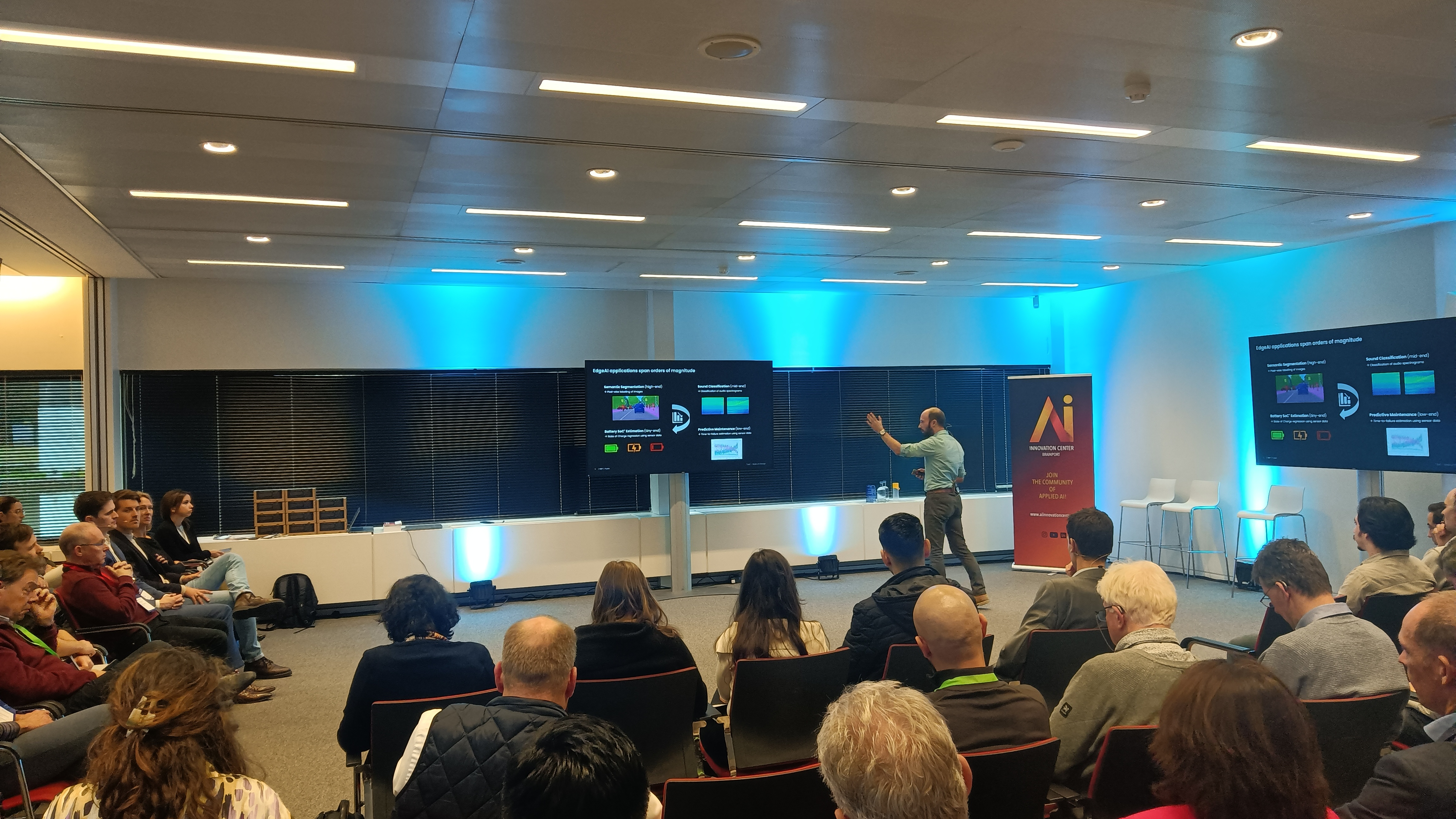
Evoluon/Eindhoven – From Factory Floor to Foreign Office: Europe Demands ‘Precision Over Hype’
The future of artificial intelligence in Europe is not a race for speed, but a battle for trust, according to key strategists and industry leaders convening at the recent “AI Summit at Evoluon Eindhoven” session. Discussions, which spanned high-level government policy and deep technical implementation, revealed a consensus: for Europe to compete globally, it must foreground human oversight, ethical governance, and radical precision, particularly as new EU regulation looms.
The session, which included contributions from the Minister of Foreign Affairs, David van Weel, established the strategic tension immediately. While there is a recognised need for massive investment to stay ahead, the critical, uncomfortable question remains: Can we truly trust AI?
The Transparency Trap
The most profound disagreement centred on the perceived value of transparency. For the end-user, the relationship with AI is defined by a “willingness to be vulnerable,” according to experts.
However, Leon Kester of TNO argued that technical transparency does not automatically lead to increased public trust. Instead, it serves a technical purpose, helping developers examine the model’s choices during the design phase. This sentiment reflects the growing reality that large, complex models often operate as “black boxes” whose outcomes are, as Joep Meindertsma of PauseAI noted, “difficult to predict.”
Meindertsma’s point was given sharp relief by the chilling example of “suicide by chat assistant,” underscoring that the challenge of AI failure is not purely technical, but fundamentally ethical and human.
The High-Risk Mandate: From Liability to the Life Cycle
For companies dealing with critical infrastructure and highly sensitive applications, the cost of failure is astronomical. This is where governance transforms from a theoretical debate into a hard-edged commercial reality.
Djoni de Vos warned that once an AI system is implemented, the provider or deployer can face significant financial liability—a “fine (pay for damage)”—if the task causes harm. This legal pressure is the primary driver behind the immediate compliance concerns surrounding the new European AI Act.
Industry leaders in precision manufacturing are already adapting. At Brainport, the focus is on achieving “precision over hype.” For a firm like ASML, which relies on superior accuracy in lithography, AI is now indispensable, using deep learning and physics knowledge to improve yield.
The challenge here is sustaining confidence. Hardware providers must develop robust AI trust scoring to convince customers that an intelligent system will remain safe, compliant, and serviceable over an industrial life cycle that can span 15 years.
The Ethical Gateway
The emerging European model dictates that ethics must be the starting point of the Data Science Life Cycle. Rather than bolting on compliance at the end, companies like Brush AI are tackling dual-use risks and sensitive data handling from the outset.
In a practical example from the life insurance sector, an AI model’s output is not immediately actioned. Instead, it is first reviewed by a human—a mandatory ethical safeguard—before being referred to a medical advisor if the output is deemed insufficient or unacceptable. This demonstrates the critical role of Human Oversight in managing the risks of high-autonomy systems.
As AI evolves into “Agentic AI”—systems that can sense, think, and act (e.g., notifying a supervisor of an explosion based on video)—the need for safety benchmarks and defined relevant knowledge becomes paramount.
The Conclusion: The Great European Differentiator
Most European businesses, it was noted, currently operate with “automated systems like 25 years ago,” illustrating a severe technological maturity gap. The true potential lies in “Intelligent Systems” that monitor, predict, adapt, and create. A compelling case study from a global brewery demonstrated the profound efficiency gains: a robot equipped with an acoustic camera detected 160% more air leaks than previous a human walking with the sound camera detector, showcasing AI’s true, verifiable value.
The ultimate strategic conclusion is clear: Europe’s future in AI is intrinsically linked to its value system. By establishing the world’s first comprehensive AI legislation and maintaining a steadfast commitment to human-centric safety, Europe is not just regulating a technology; it is building a new, trust-based foundation for its competitive edge against global rivals. This framework, while posing initial regulatory hurdles for entrants, aims to ensure that the technology that drives global industry is not only efficient, but fundamentally accountable.
Read more about AI Summit 2025 & AI Matters
Reactions: Paula Rook at paula@flyingwinewriter.com